What a Plant Hardiness Zone Tells You About Winter Survival
A plant hardiness zone can help you decide whether a perennial is a reasonable choice for your Maryland garden, but it cannot promise that the plant will survive every winter. The key is understanding what the zone measures, what it leaves out, and how a specific yard can differ from the conditions suggested by a map. Use it as a starting point, then consider the plant and the planting site.
What a plant hardiness zone actually measures
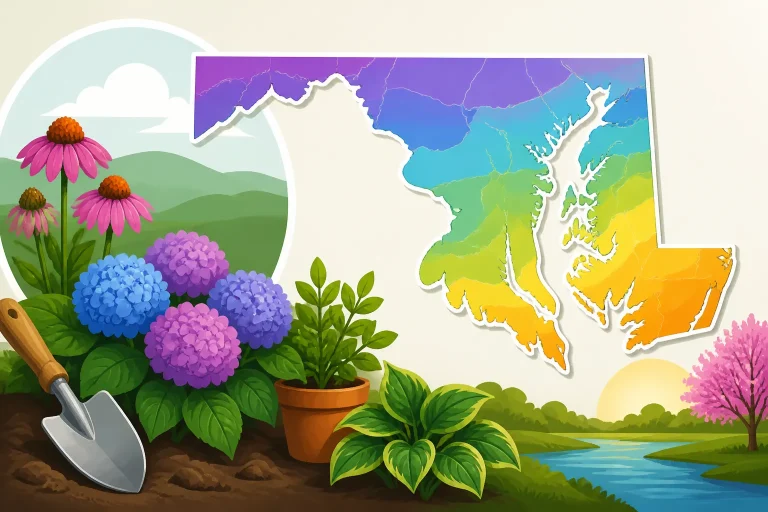
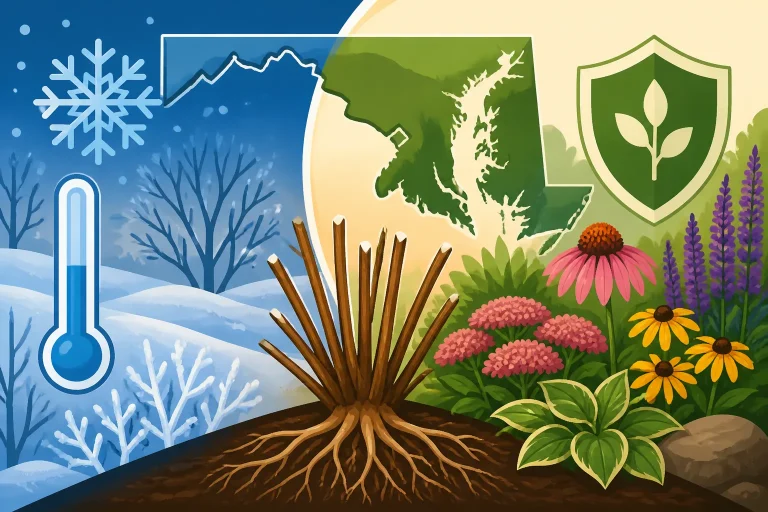
The USDA Agricultural Research Service defines a USDA hardiness zone using the average annual extreme minimum winter temperature, not the coldest temperature a place could experience; the zone indicates which perennials are more likely to survive winter. That distinction matters. A zone describes a long-term pattern of winter lows, rather than a guarantee about what will happen in a particular year or at a particular spot in your yard.
A plant’s listed hardiness range is a way of comparing its likely winter tolerance with the cold conditions associated with a location. When the zone for your area falls within the plant’s stated range, the plant may be a suitable candidate. But that comparison is not a promise of survival. A plant can struggle even where its hardiness rating appears to fit, and a plant near the edge of its range may sometimes grow successfully in a favorable site.
Think of the zone as one piece of evidence about winter survival—not a complete suitability rating. It does not describe every feature of your garden, and it does not account for every stress that can affect a plant. It is most useful when paired with information about the plant’s needs and an honest look at your site.
The average is not a record low
The average annual extreme minimum is a measure of typical severe winter cold over time. It is not the lowest temperature that has ever occurred in a place, nor does it cap the cold a location might experience in a particularly harsh season. In practical terms, a plant that generally handles the conditions associated with your zone could still be tested by unusually severe weather.
That is why a hardiness rating should not be read as an insurance policy. It describes a likelihood, not certainty. When choosing a plant that sits near the cold-tolerance limit for your area, consider whether your site has favorable shelter and whether you are prepared for the possibility of winter damage. If the plant is important to a design, choosing one with more cold tolerance can reduce risk, though it still cannot remove every risk.
For a closer explanation of how a map can inform Maryland plant choices, see USDA Plant Hardiness Zone Map Guide for Maryland Gardeners. The useful question is not only “Does this plant match my zone?” but also “What might make this particular spot colder, warmer, wetter, or more exposed than the map suggests?”
A zone is not a planting calendar
Hardiness zones are about the likelihood that perennial plants can survive winter cold. They do not tell you when to sow vegetables, when a frost might occur in spring, or how long a crop has to mature. Those questions involve other aspects of local weather and garden timing.
This distinction is especially important for gardeners planning both ornamental beds and food gardens. A perennial may return after winter and still need the right light, soil moisture, and drainage to thrive. A vegetable may be damaged by a spring cold snap even if the region’s hardiness zone is appropriate for a different perennial. For the difference between zone information and seasonal planting decisions, read Why Hardiness Zones Do Not Tell You When to Plant Spring Crops and USDA Plant Hardiness Zones vs Freeze Dates: What Each Number Means.
A zone can help screen choices. It cannot replace a planting calendar, a local forecast, or attention to the conditions that a particular plant needs through the growing season.
How to use a zone when comparing plants
Start with a reliable listing for the plant you are considering. Nursery labels and reference descriptions may show a hardiness range or identify the cold conditions a plant is suited to. Compare that information with the zone shown for your area on the USDA map, then treat the result as a first-pass assessment rather than a final decision.
If your area falls within the plant’s listed range, the plant is a plausible option from a winter-hardiness perspective. You still need to check whether the site offers suitable sunlight, soil, moisture, and drainage. If the plant is at or beyond the colder edge of its listed tolerance, expect greater uncertainty. A protected location may help, but favorable placement does not make a tender plant reliably hardy in every winter.
A plant’s rating is also not a substitute for understanding what kind of plant it is. Some plants are perennial in the sense that they can survive winter and resume growth, while other plants commonly grown in Maryland are treated as annuals or brought indoors for protection. A warm-season crop’s ability to grow during summer is a different question from a woody shrub or herbaceous perennial’s ability to persist through winter.
Check what the plant description means
Plant labels are useful, but they can be brief. Look for whether the listing is describing winter survival, preferred growing conditions, or general performance. If a listing provides a range, do not assume that every location within it will produce the same growth or flowering. A plant near the limit may survive but show more winter damage, have less vigorous growth, or need more careful site selection than it would in a more favorable part of its range.
Also pay attention to what the listing does not say. A hardiness rating does not tell you whether the plant tolerates wet soil, summer heat, drought, wind, shade, or a site that stays damp through winter. Those factors can be just as important to whether a plant establishes and remains healthy.
When comparing possible choices, keep the purpose of the plant in mind. If you want a dependable border that returns with little intervention, a plant well suited to the local winter conditions and the actual site may be a safer choice than one at the edge of its hardiness range. If you are willing to accept some risk for a particular flower, foliage effect, or fruit, the same edge-of-range plant might be worth trying in a sheltered spot.
Treat the map as regional information, not a yard diagnosis
A map provides a helpful regional reference, but a yard contains small differences that a broad map cannot show. The side of a house, a slope, a wall, a dense planting, or an open stretch of ground can change the conditions a plant experiences. A spot that is protected from cold wind may behave differently from one exposed to it. A low area where cold air collects can be more vulnerable than a nearby site on higher ground.
These differences do not mean the map is useless. They mean its scale is not the same as the scale of a garden bed. Use the map to establish a regional baseline, then assess the places where you plan to plant. For a practical look at how buildings affect local conditions, see Sheltered Microclimates: How Buildings Shift Yard Freeze Dates. A low pocket may present a different challenge; How Low-Lying Frost Pockets Delay Spring Garden Planting explains why garden position matters for cold-sensitive growth.
Why plants can fail even when the zone seems right
Winter survival depends on more than the lowest temperature a plant can tolerate. A plant’s condition going into winter, the pattern of weather, the way water moves through the soil, and the exposure of the planting site all influence the outcome. A zone match is valuable, but it answers only part of the question.
Winter conditions fluctuate
A cold winter can challenge a plant that has otherwise grown well. Rapid swings between mild and cold conditions may also be stressful. Plants do not experience winter as a single temperature reading: they experience a sequence of weather, changing moisture, and shifts in their surroundings. A rating based on average annual extreme minimum temperature cannot describe every detail of that sequence.
This is one reason a plant’s survival can vary from year to year. One winter may be relatively uneventful, while another exposes a plant to conditions it rarely faces. A perennial may also lose some aboveground growth and still recover from its roots, or it may show damage that becomes clearer when growth resumes. The zone is most useful for estimating broad winter suitability, not predicting the exact condition of every stem after a particular winter.
Wet soil and drainage can be as important as cold
A plant that tolerates winter cold may still fail in a site where water stands around its roots or the soil stays saturated. Poor drainage can weaken plants and make it harder for them to persist through stressful conditions. At the other end of the spectrum, a site that dries out quickly can leave a newly planted perennial vulnerable while it is establishing.
Before planting, look at the soil after rain and consider how quickly excess water moves away. Notice whether the site stays soggy, dries rapidly, or receives runoff from nearby surfaces. These observations help distinguish a plant that is poorly matched to the site from one that is simply being placed in the wrong part of it. If you are unsure about the soil, Managing Soil Moisture Across Maryland Clay, Loam, and Sand offers context for how different soil textures affect water conditions.
Drainage also affects how much a zone match can help. A plant suited to local winter cold may be a poor choice for a persistently wet location if it needs well-drained ground. Conversely, a species adapted to moisture may perform poorly in a dry bed even if its hardiness rating fits. Match the plant to the conditions it will actually encounter, not just the winter number.
Exposure changes what a plant experiences
Wind, open exposure, nearby pavement, walls, tree cover, and slope can all shape a planting site. A sheltered bed may be less exposed to drying wind than a bare, open area. A wall may create a warmer or more protected pocket, while a north-facing or shaded location can behave differently from a sunny one. A low place can collect cold air, while a slope may allow it to move away.
These observations are useful for choosing where to plant, but they should not be mistaken for a precise temperature calculation. A microclimate is a local difference, not a guarantee that a tender plant will survive. A protected place may improve the odds, while a site with cold-air pooling or strong exposure may raise the risk.
Observe your yard through changing conditions before committing a valuable plant to a difficult location. Note which beds are exposed to wind, where snow tends to linger, where water collects, and which areas remain shaded. The goal is not to produce a technical map of every corner; it is to avoid treating all parts of the yard as if they shared identical conditions.
Establishment and plant health matter
A plant that has not established well may be less resilient than a healthy, well-sited plant. Root condition, stress from planting, damage, and inadequate moisture during establishment can all affect how well a perennial settles in. A plant struggling through its first growing period may have fewer reserves for handling later stress than one that has had time to become established.
Good placement begins before planting. Check the plant’s light and moisture requirements, prepare a suitable site, and avoid placing it where its roots will face conditions that conflict with its needs. After planting, pay attention to moisture and signs of stress. The right care does not change a plant’s inherent cold tolerance, but it can help avoid preventable problems that reduce its ability to thrive.
For guidance on choosing timing as well as location, see When to Plant Perennials and Shrubs in Maryland for Strong Roots. A plant may have the right hardiness rating and still be set up poorly if it is planted into an unsuitable site or left to struggle during establishment.
Choosing perennials for Maryland gardens
Maryland gardeners may encounter different conditions from one yard to another, and the same regional map information will not describe every planting site. Instead of relying on a single zone number as a complete verdict, combine the map with what you know about the plant, the site, and the conditions through the year.
A useful selection process starts with the actual place where the plant will grow. Is it sunny or shaded? Does the soil drain well? Is the bed exposed to wind, or does it benefit from shelter? Does cold air seem to settle there? Then compare the answers with the plant’s needs and its hardiness information. A plant can be an excellent regional choice but a poor match for a shaded, wet, or exposed corner.
Decide how much risk is acceptable
Not every planting decision needs to be equally cautious. For a large or prominent planting, choose plants with a strong match to both the site and the local winter conditions. That reduces the chance that one difficult winter will leave a major gap. For a smaller trial planting, you may decide to test a plant closer to its cold limit, especially if you can place it in a favorable microclimate.
Risk also depends on replacement. A plant that is easy to replace and inexpensive to lose may be a reasonable experiment. A mature shrub that anchors a garden design may warrant a more conservative choice. Consider the effort involved in replacing a plant, how much the design depends on it, and whether you would be comfortable protecting or monitoring it.
The goal is not to avoid every plant with uncertain prospects. It is to make uncertainty visible before planting. A hardiness rating helps you spot a possible winter limitation; it cannot tell you whether taking that risk is worthwhile for your garden.
Think about the whole growing year
Winter hardiness is important, but a plant also has to live through the rest of the year. A perennial that tolerates cold may still be poorly suited to summer conditions or to the moisture patterns in a particular bed. A plant may struggle in intense sun, dense shade, persistently wet ground, or a dry site even when its winter rating is suitable.
This is why plant selection should not stop after checking the zone. Read the description for light, soil, and moisture requirements, and compare them with the location you have. Avoid trying to compensate for a basic mismatch with repeated interventions. Choosing a plant that fits the site is often a more dependable path than trying to force a poor match to work.
For a broader view of seasonal timing, Maryland Growing Season Calendar: From Spring Thaw to Fall Freeze helps put planting and growth into a seasonal context. The zone and the growing-season calendar answer different questions, and using both can make planning more coherent.
Use local variation without overpromising
Within a yard, a sheltered bed may be a reasonable place to try a plant that feels marginal elsewhere. A more exposed bed may call for a plant with a stronger cold tolerance. That is a useful way to apply microclimate information, as long as it remains a judgment about relative risk rather than certainty.
Take notes about which plants emerge well after winter and which areas seem to have more damage. Keep track of the site conditions as well as the plant name: exposure, drainage, shade, and nearby structures can help explain the result. If a plant fails, the cause may be winter cold, but it may also be poor drainage, a site mismatch, establishment stress, or another problem. A record can help you make a better choice next time instead of assuming the zone alone explains the outcome.
What a hardiness zone cannot tell you
A common source of confusion is expecting one map category to answer several different gardening questions. A hardiness zone is useful for assessing perennial winter survival, but it is not a full climate profile and should not be treated as a universal planting instruction.
| Question | What a hardiness zone can contribute | What else to consider |
|---|---|---|
| Is a perennial a plausible winter-survival choice? | A regional comparison with the plant’s listed hardiness information | Yard microclimate, drainage, exposure, and plant health |
| When can a vegetable be planted outside? | Little direct timing guidance | Crop needs, soil conditions, frost risk, and local seasonal timing |
| Will a plant tolerate summer heat? | No direct answer about summer performance | The plant’s heat, sun, and moisture needs |
| Will a plant thrive in a particular bed? | A first check on winter cold tolerance | Soil, light, water, wind, and available space |
| Will a plant survive an unusually severe winter? | A broad indication of typical winter conditions | The actual weather, site exposure, and plant condition |
It does not predict frost timing
A hardiness zone is not a date for the last spring frost or the first autumn frost. Those are seasonal timing questions, and the timing can vary. A perennial may be able to survive winter cold yet produce tender new growth that is vulnerable to a later cold event. Similarly, a vegetable planting decision depends on the crop and the conditions at the time—not simply on the hardiness zone.
Use a planting calendar or local weather information when planning time-sensitive work. For vegetable schedules and seasonal choices, see What to Plant Now in Maryland Gardens. For decisions about frost and planting windows, Frost Dates and Planting Windows Across Maryland Climates addresses a separate part of the planning process.
Keeping these tools separate prevents a common mistake: treating a suitable perennial zone as permission to plant every crop or tender plant outdoors. The zone helps assess winter persistence; it does not replace judgment about what a plant can tolerate during a spring cold snap or a changeable fall.
It does not describe summer heat or moisture
The zone is centered on winter cold. It does not tell you whether a plant will tolerate the hottest, driest, or most humid parts of the growing season. A plant may be winter hardy but perform poorly in a hot, dry, exposed site. Another may tolerate heat but be injured by winter conditions.
Soil moisture and drainage are also outside the meaning of a hardiness zone. The map will not reveal whether a bed has compacted soil, standing water, or fast drainage. Nor will it tell you whether the plant needs consistently moist ground or prefers a site that dries between rain events. Read the plant description for those needs and observe the garden itself.
It does not guarantee flowering or fruiting
Survival is not the same as ideal performance. A perennial may live through winter but produce limited growth, flower poorly, or fail to develop as expected because of unsuitable light, soil, moisture, pruning, or other growing conditions. A winter rating addresses a narrower question: whether the plant is more likely to persist through winter cold.
For flowering shrubs and fruiting plants, consider the complete set of conditions needed for growth and reproduction. A zone match is a useful screening step, but it cannot promise blooms or harvests. If a plant’s main purpose is a particular display or crop, check that its other growing requirements also fit your site.
A practical process for using the map
A reliable decision does not need to be complicated. The aim is to combine regional hardiness information with the plant’s needs and your observations of the intended planting spot.
- Identify the specific plant. Confirm its name and look for a dependable description of its winter hardiness, light, soil, and moisture needs. Similar-looking plants can have different requirements, so avoid making a decision from a broad category alone.
- Check the map for your area. Treat the map as regional guidance, not a reading for every bed or corner of the yard. If you need help interpreting the map for Maryland, use USDA Plant Hardiness Zone Map Guide for Maryland Gardeners.
- Compare the plant’s rating with the map. A match makes the plant a plausible option for winter survival, not a sure thing. Be more cautious when the plant is near the colder edge of its stated tolerance.
- Assess the planting spot. Look at sun, shade, wind exposure, slope, drainage, and nearby walls or structures. Note whether the area seems protected or especially exposed.
- Choose a level of risk that suits the plant’s role. Use a dependable choice for a prominent or difficult-to-replace planting. Consider a trial in a smaller, favorable spot if you are comfortable with uncertainty.
- Plan for establishment. Make sure the location suits the plant and monitor it as it settles in. Avoid treating winter hardiness as a substitute for appropriate planting and care.
- Review the result after winter. Note whether the plant survived, where damage appeared, and what the site was like. Use those observations to refine future choices.
When the plant is near its cold limit
When a plant is listed close to the colder edge of its range for your area, decide whether the possible reward is worth the uncertainty. If you choose to try it, select the most favorable suitable site rather than placing it in an exposed or poorly drained spot. A protected location can make the conditions more favorable, but it cannot guarantee that the plant will withstand every winter.
You can also reduce the consequences of an unsuccessful trial by keeping the planting small or choosing a location where replacement would not disrupt the garden. If the plant becomes a central feature, consider whether a more cold-tolerant alternative would meet the same design need with less risk.
Avoid interpreting survival through one mild winter as proof that a plant is reliably suited to the site. One season cannot show how a plant will respond to every kind of winter. Likewise, damage after a severe winter does not necessarily mean the map was wrong; the map describes average conditions, not the worst condition a place can experience.
When several plants seem suitable
If multiple choices appear to fit the map, compare their site requirements and the role you want them to fill. One may suit a sunny, well-drained border, while another may be better for a shaded or moist location. Compare mature size and growth habit as well, so the plant has room to develop without crowding paths or neighboring plants.
Then decide whether you prefer a conservative choice or a plant that involves more uncertainty. A hardiness match is a starting point for narrowing options; it does not rank plants by overall suitability. If a plant fits the zone but not the bed, the mismatch remains. If two plants both fit the bed, their differences in maintenance, appearance, and growth habit may be more important than a small difference in winter tolerance.
Frequently Asked Questions
Does a matching hardiness zone guarantee winter survival?
No. A matching zone means the plant is a plausible choice based on typical severe winter cold. Local exposure, drainage, plant health, and unusually cold weather can still affect survival.
Can a plant survive in a colder zone than its listing suggests?
It may sometimes persist in a particularly favorable spot, but that is uncertain. Shelter and other local conditions can improve the odds without making a plant reliably suited to colder conditions.
Should I use a hardiness zone to time vegetable planting?
No. A hardiness zone helps assess perennial winter survival, not when to sow or transplant vegetables. Use crop-specific timing information and consider current soil and weather conditions.
Why might a hardy plant struggle in my garden?
Winter cold may not be the problem. Poor drainage, unsuitable light, moisture stress, wind exposure, or a difficult establishment period can all contribute. Compare the plant’s full requirements with the conditions of its planting site.
Sources
- USDA Agricultural Research Service — How to Use The Maps (checked November 15, 2026)
Disclaimer
This article is for general informational purposes only and does not constitute professional advice. Laws, prices and regulations vary by location and change over time. Consult a qualified professional for guidance on your specific situation. Maryland Gardening Guide is not a government agency and is not affiliated with any university extension, state department of agriculture or other government agency.