What a Plant Hardiness Zone Tells You About Winter Survival
Maryland plant hardiness zones estimate typical winter lows, not the worst cold a yard may face; combine them with microclimates and plant needs.

Maryland plant hardiness zones estimate typical winter lows, not the worst cold a yard may face; combine them with microclimates and plant needs.
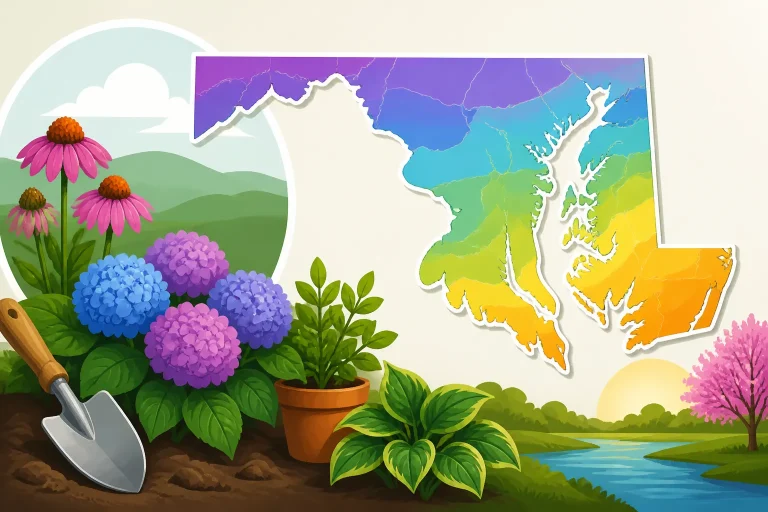
The USDA Plant Hardiness Zone Map helps Maryland gardeners assess winter survival, but local site conditions and frost-based planting calendars matter too.
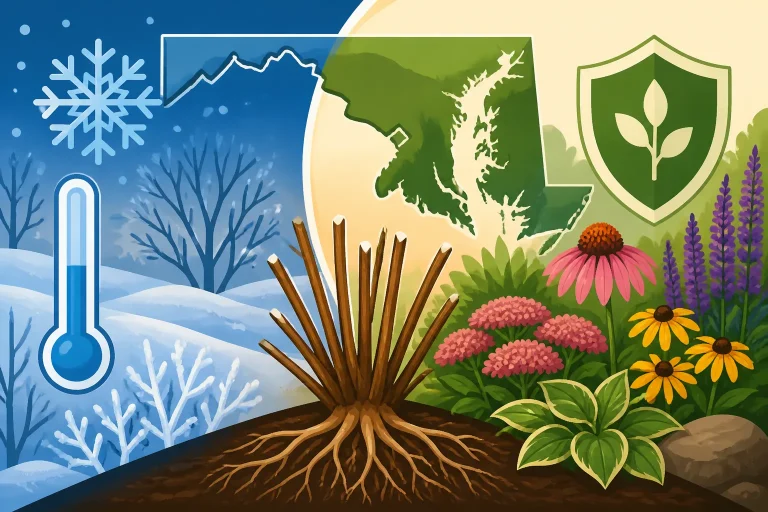
Maryland perennial hardiness depends on more than a map zone: compare plant ranges with local microclimates, drainage, exposure, and growing conditions.

USDA hardiness zones describe winter cold, not Maryland’s last spring frost; use local probabilities, crop needs, soil, and forecasts to plan planting.
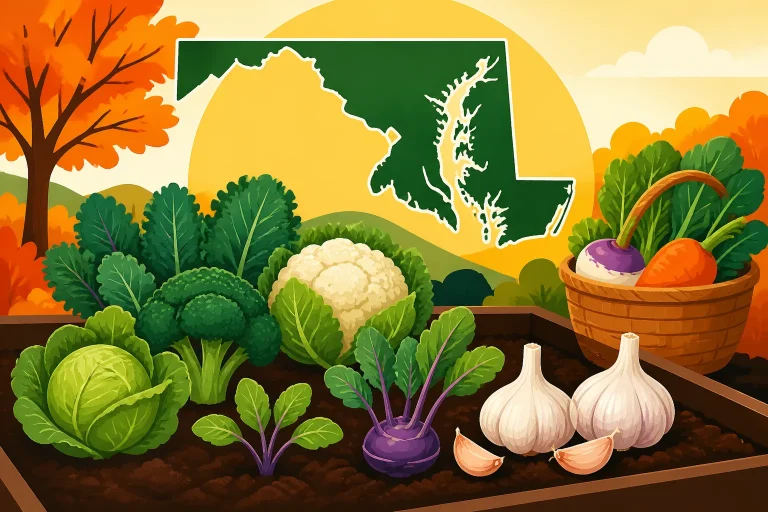
Maryland fall vegetables need summer sowing, frost-aware timing, and local adjustments; plant garlic in autumn in a well-drained bed for better establishment.
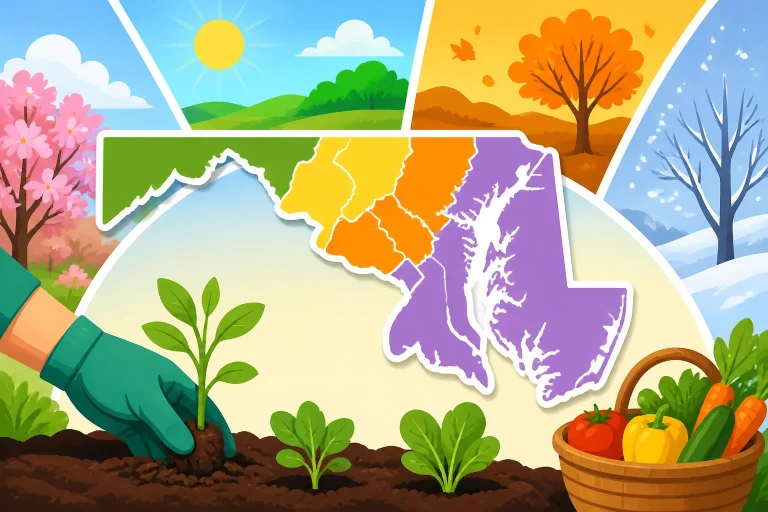
Maryland planting dates vary by region and yard conditions; use the central Maryland calendar as a starting point, then adjust and verify locally.
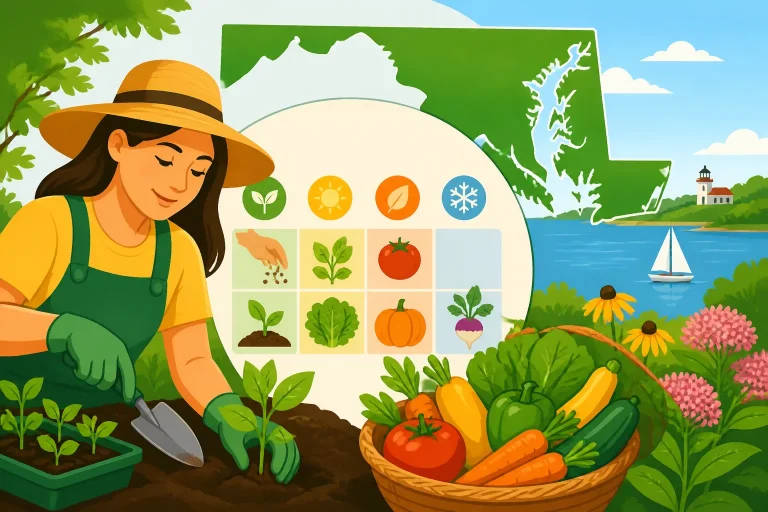
Maryland planting calendar for spring through fall, with regional timing tips and mid-November guidance on sowing, harvesting and garden prep.
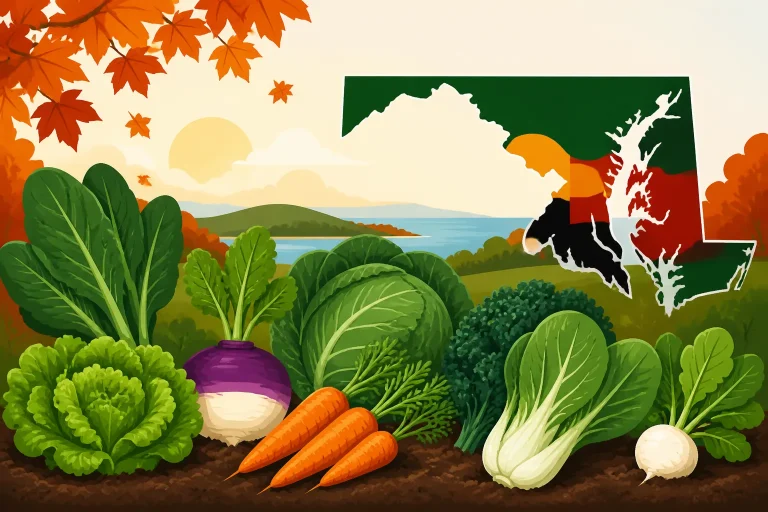
Maryland fall vegetable gardening depends on working backward from local frost risk, choosing suitable crops, and protecting young plants from heat.
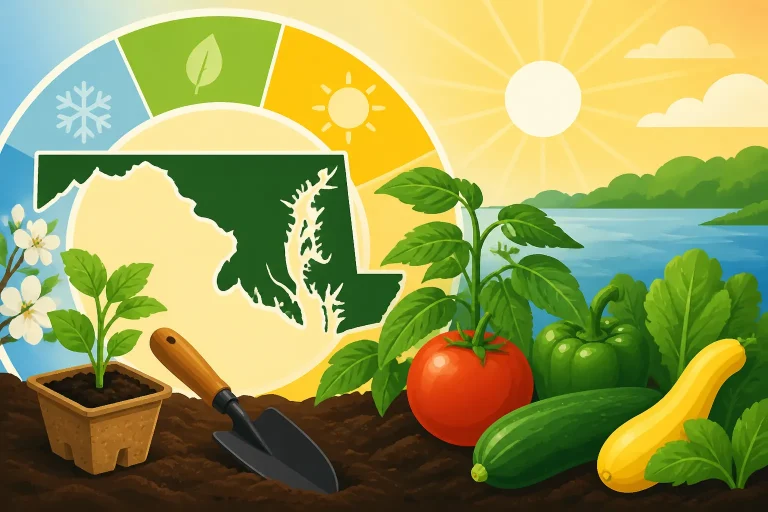
Safe summer vegetable planting in Maryland depends on local frost risk, soil warmth, crop type, and careful transplant acclimation—not one statewide date.