Maryland Fall Vegetable Gardening Guide: Timing Cool-Season Crops
A fall vegetable garden can keep producing after summer crops fade, but the window for getting new plants established is easy to misjudge. Maryland’s regional weather differences and midsummer heat make a single planting date unreliable. The better approach is to choose crops for fall, work backward from local cold-weather risk, and protect young plants while they settle in.
Why fall vegetable timing takes a different approach
Fall gardening is not simply spring gardening shifted to another season. In spring, gardeners often wait for soil and air to warm enough for planting. In late summer, the challenge is establishing crops while the soil and air may still be hot, then giving them enough growing time as daylight shortens and cooler weather approaches.
That change affects both crop choice and sowing strategy. Leafy greens, roots, and many brassicas are common fall choices because they are suited to cooler growing conditions. Heat-loving summer crops are a different fit. According to University of Maryland Extension, warm-season crops such as tomatoes, peppers, cucumbers, and beans are planted in late spring and summer and grow best in warm weather. As those crops wind down, a fall garden can use the space for vegetables selected for the cooler part of the year.
The calendar is only one part of the decision. A crop needs time to germinate or recover from transplanting, grow leaves and roots, and reach a useful harvest stage before cold weather slows or stops growth. That process varies with the crop, the variety, the planting method, soil conditions, and the weather in your particular garden. A packet’s days-to-maturity information can help with planning, but it is not a guarantee that plants will grow at a steady pace in late-season conditions. For help interpreting that information, see Understanding Days to Maturity: Direct Sowing vs Transplants.
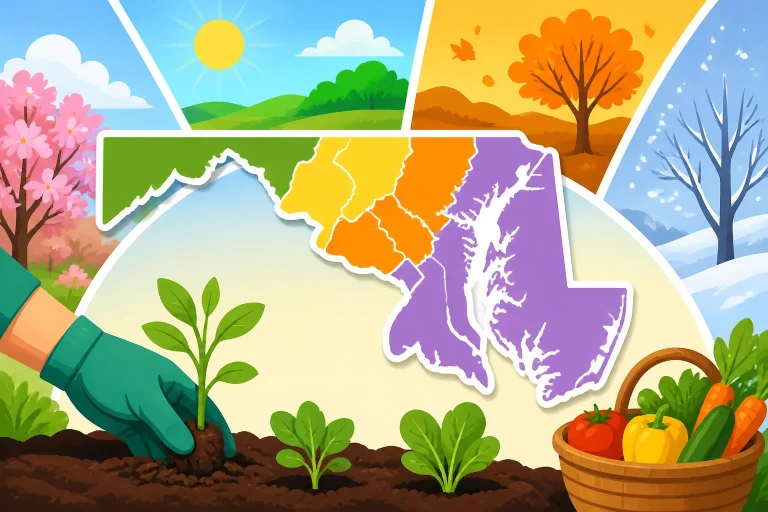
Maryland’s conditions vary across the state. A garden in a cooler or more exposed location may face a shorter practical growing window than a sheltered site, while a warm urban bed may hold heat longer. Even nearby yards can differ because of slope, shade, wind, and buildings. That is why broad calendars are useful starting points, not promises for every garden. Maryland Planting Dates: Shifting Schedules by Region and County offers more context on adjusting planting plans to local conditions.
A successful fall plan usually starts with a few practical questions:
- Which crops do you want to harvest, and do they suit cooler weather?
- Will you direct-sow seeds, transplant seedlings, or use both methods?
- How much time does each crop need to establish and produce?
- Is the planting area likely to stay too hot or dry for young seedlings?
- What protection can you provide if the weather turns cold before harvest?
Thinking through those questions helps prevent a common disappointment: sowing a crop because a calendar says it is time, without checking whether the bed is ready or whether the crop can mature in the conditions ahead. Fall gardening works best when you plan for the full transition from summer heat to autumn cold, rather than focusing on a single planting day.
Choose crops with the coming season in mind
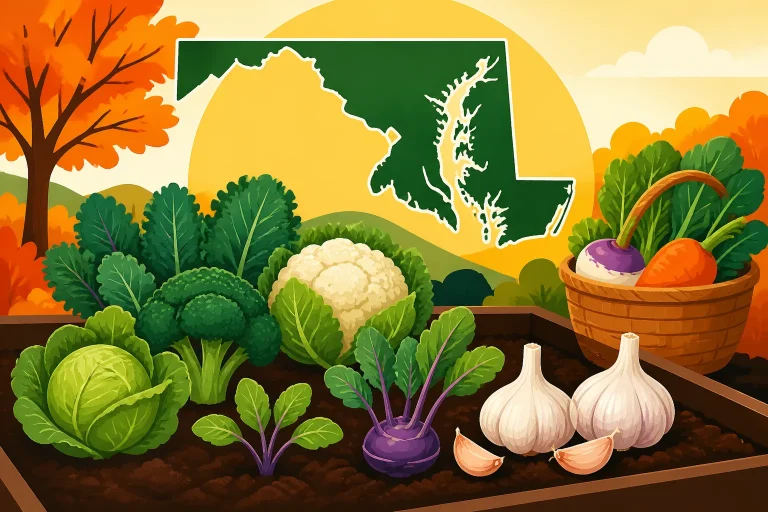
The best fall crops are not necessarily the same vegetables that performed well through summer. Select crops for their ability to grow in cooler conditions and for the kind of harvest you want. Leafy crops can provide repeated picking when conditions suit them. Root vegetables offer a different harvest rhythm, while brassicas can provide substantial heads or leaves if they have time to develop.
| Crop group | Examples | Fall-planning consideration |
|---|---|---|
| Leafy greens | Lettuce, spinach, arugula, kale, collards | Choose crops and varieties suited to cooler conditions, and protect tender young growth from heat while it establishes. |
| Brassicas | Broccoli, cabbage, turnips | These need enough time to become established and develop before cold weather limits growth. Transplants can help when seed-starting time is limited. |
| Roots | Beets, carrots, radishes | Prepare a loose, workable seedbed so roots can develop without encountering compacted clods or obstacles. |
| Alliums | Garlic | Garlic has a different planting and harvest cycle from quick fall salad crops; plan it as a longer-term planting rather than an immediate harvest. |
| Herbs and mixed greens | Cool-season herbs and salad mixes | Check the crop’s needs and expected harvest stage, since a mixed planting may not mature evenly. |
This is a planning comparison, not a guarantee that every crop will thrive in every Maryland yard. Local conditions, the selected variety, and the planting method all matter. For crop-specific timing, use When to Plant Fall Vegetables, Brassicas, and Garlic in Maryland and When to Plant Fall Turnips and Greens in Maryland Beds as starting points, then compare them with the seed packet and your local conditions.
Think about the harvest you want
A fall garden can be designed for different kinds of harvest. If you want leaves for salads and cooking, consider crops that can be picked as they grow, rather than waiting for a single mature head. If you prefer roots, make sure the bed is prepared for direct sowing and that the crop has a workable span of growing weather ahead. If you want broccoli or cabbage, plan for the longer development involved in producing a mature head, and consider whether transplanting is practical.
You do not need to plant every crop at once. A small, focused bed is often easier to water, protect, and keep weeded than a large collection of crops that all need attention at the same time. Choose vegetables your household will use, then decide whether each one is worth the effort of sowing or transplanting during the warm part of the season.
Crop maturity information should guide your expectations, not dictate the plan by itself. Seed packets and plant labels typically describe growing time under particular assumptions. Actual progress can be affected by heat, uneven moisture, poor germination, transplant shock, pests, and declining daylight. If the calendar looks tight, choosing a quicker crop or a transplant may be more sensible than trying to force a slow crop into the remaining season.
Avoid treating all cool-season crops alike
“Cool-season” is a useful category, but it does not mean every crop behaves the same way. Some crops are grown for leaves, others for roots, and others for a head or bulb. Their useful harvest stage differs, as does the amount of growth needed to reach it. A bed that is suitable for quick greens may not be the best place for a crop that needs more time or room.
Read the planting instructions for each crop and variety. Note whether the seed is meant to be sown directly or whether a transplant is a practical option. Then consider what could go wrong in your site: a bed may dry quickly in sun and wind, stay wet after heavy rain, or receive shade that slows growth. Match the crop to the conditions rather than choosing only by preference.
Garlic deserves particular consideration because it is not managed like a quick crop of fall greens. If you are planting it, plan for its longer cycle and use a regional guide such as Maryland Garlic Planting Guide: Regional Timing from Hills to Shore. Keep it separate in your planning from vegetables intended for harvest during the coming cool season.
Work backward from local cold-weather risk
The most useful way to plan fall sowing is to begin with the end of the growing window and work backward. The aim is not to predict the exact day cold weather will arrive. It is to estimate how much growing opportunity remains, then choose crops and planting methods that fit within it.
Start by looking up local frost and freeze information for your area. Use it as a planning reference rather than a fixed deadline: weather varies from year to year, and a historical date cannot guarantee what will happen in your garden. A sheltered bed beside a building may behave differently from an open, low-lying bed, and a forecast can change as the season approaches. For a broader explanation of how to use local information, see Planning Fall Vegetable Beds Around Maryland Freeze Dates and Finding Local Frost and Freeze Date Normals for Your Maryland Town.
Once you have a local reference point, consider how much time each crop needs to reach the harvest stage you want. Check the seed packet or plant label and allow for the fact that late-season growth may not match ideal growing conditions. If you are direct-sowing, include time for germination and early growth. If you are transplanting, account for the time seedlings need to recover and begin growing in the bed. A transplant does not erase the need for establishment; it simply shifts some of the early development into a protected setting.
Make a crop-by-crop plan
Write down the crops you want and record the details that affect timing:
- The expected harvest stage, such as baby leaves, full-size leaves, roots, or heads.
- The maturity information on the packet or label.
- Whether the crop is intended for direct sowing or transplanting.
- Whether the bed is likely to be hot, exposed, shaded, or prone to drying.
- Whether you can provide water and temporary shade during establishment.
- Whether a cover or other protection will be available if cold weather arrives.
This does not need to become a complicated spreadsheet. A notebook or simple garden record is enough, provided it helps you compare the crop’s needs with the remaining season. The key is to make the decision before sowing, not after seedlings are struggling or the bed is already occupied. Keeping Garden Records to Plan Next Year’s Planting Schedule can help turn this season’s observations into better plans later.
Be flexible when the schedule is tight
If the planting window looks short, adjust the plan rather than planting every crop regardless. You might choose a crop with a shorter expected path to harvest, buy healthy transplants for a crop that would otherwise need a long start from seed, or reduce the area devoted to a slow-maturing vegetable. You can also leave space for a later planting if the first one fails, rather than filling the entire bed with one sowing.
A late start does not automatically make a fall garden pointless. Some crops can still provide useful leaves or small harvests, while others may not have enough time to reach their expected mature size. Be realistic about what you are trying to harvest. If the goal is a few servings of greens, a smaller crop may be worthwhile even when there is not enough time for a full-size head or root.
For more on choosing between seed and purchased plants, see Starting Late in Maryland: When to Buy Starts Over Seeds. The main trade-off is control and flexibility: seed gives you more choice and can be economical, while a transplant may save some establishment time. Either can fail if the bed is too hot, dry, crowded, or poorly prepared, so the method is only one part of the decision.
Start seeds and transplants successfully in summer conditions
Late-summer seed starting often means working against heat and drying soil. A seedbed that is ideal in spring may bake in strong sun, and a small seedling has little room to recover if its roots dry out. Successful sowing depends on keeping the seed zone consistently suitable for germination and giving new plants a manageable transition into the garden.
Direct-sow where roots and spacing matter
Direct sowing is useful for crops that establish well in place or do not respond well to being moved. It avoids transplant disturbance and lets the plant develop directly in the soil where it will grow. Root crops are a clear reason to consider direct sowing: their roots need room to develop in the bed, and rough handling during transplanting can interfere with that growth.
Prepare a smooth, open seedbed before sowing. Remove weeds and large debris, loosen the surface enough for the seed to make contact with soil, and break up clods that could leave uneven gaps. Avoid working soil when it is so wet that it smears or compacts. If the soil is hard and crusted, seeds may struggle to emerge, while heavy surface crusting after watering can create another barrier.
Sow according to the seed packet. Covering seeds too deeply can delay or prevent emergence, while leaving them exposed can allow them to dry or wash away. Keep the surface evenly moist during germination. In hot weather, that may require closer observation than it would in cooler spring conditions. Water gently so the seeds are not displaced, and check the soil itself rather than assuming that a damp-looking surface means the seed zone is moist.
A thin layer of suitable mulch can help reduce surface drying after seedlings are established, but do not smother tiny sprouts. Keep mulch from covering the seed row until the crop has emerged and can grow through it. If weeds are appearing faster than seedlings, careful shallow cultivation between rows may help without disturbing the crop.
Use transplants when they solve a real timing problem
Transplants can be useful when a crop needs a longer early start, when seed germination would be difficult in a hot bed, or when the planting window has already narrowed. They also make it easier to position plants at consistent spacing. However, a transplant that is root-bound, stressed, or poorly acclimated may not establish quickly, so buying a plant is not a guarantee of a faster harvest.
Choose sturdy, healthy plants and inspect them before planting. Avoid plants that are severely wilted, damaged, or showing signs of disease or pests. Follow the plant label for spacing and planting depth. Water the root ball and surrounding soil so roots have contact with moist earth, then monitor the bed closely as the plants adjust.
A seedling raised in protected conditions may be sensitive to direct sun, wind, and temperature changes. Gradually exposing it to outdoor conditions before planting can reduce the shock of the transition. For a fuller explanation of that process, see Acclimating Tender Transplants to Maryland Garden Beds. After planting, watch for drooping, scorched leaves, or stalled growth. A temporary period of light shade can help reduce stress while roots settle, especially when the planting site is hot and exposed.
Keep young seedlings from overheating
The hardest part of fall gardening may be getting a crop started during weather that still feels like summer. Young plants can struggle when the soil is hot, the surface dries quickly, or the afternoon sun is intense. A small seedling has limited roots, so it cannot reach moisture as well as an established plant.
Choose the sowing location with care. A spot with some afternoon shade may be easier for seedlings than an exposed bed that receives strong sun all day. You can also use a temporary shade cloth or other suitable cover, making sure it does not trap excessive heat or press on the plants. Check the bed regularly and remove or adjust protection as conditions change.
Water the soil rather than relying on brief surface wetting. The goal is consistent moisture near the seeds and roots, not a constantly saturated bed. Soil that remains waterlogged can create problems of its own, and a crusted surface may interfere with emergence. Pay attention after hot, windy weather, when a bed may dry faster than it appears. Protecting Young Fall Seedlings from Maryland Midsummer Sun and Heat covers practical ways to reduce that early stress.
Prepare the bed for an autumn crop
A fall planting has to share space with the remains of summer. Tomatoes, beans, cucumbers, and other warm-season plants may still occupy beds when the next crop is ready to go in. The transition works best when you decide in advance which plants are finished, what can remain productive, and how the soil will be prepared without delaying sowing.
Clear space selectively
Do not remove healthy, productive plants just to make the garden look tidy. Instead, identify which summer crops are no longer producing well, are declining, or are taking up space needed for the fall plan. Remove spent plants and weeds promptly, and deal with diseased material carefully rather than leaving it in the bed. Keep healthy plants that still fit your plan, but avoid crowding new seedlings beneath dense foliage where they will receive little light or airflow.
If you are replacing a summer crop, consider the condition of the soil underneath it. Foot traffic, repeated watering, and root growth may have left the bed compacted or uneven. Loosen only what needs loosening and avoid turning wet soil into dense clods. Remove large roots and debris that would obstruct direct-sown crops, but do not assume that every bed needs heavy digging or extensive amendment.
A rotation plan can help avoid repeatedly growing the same crop family in the same spot. Even in a small garden, moving a crop group to another bed when practical can make it easier to organize planting and observe problems. If space is limited, use container or succession options where suitable rather than forcing every crop into a single crowded bed. Replacing Spent Summer Crops: Timing Your Autumn Garden offers more detail on deciding when to clear space.
Check drainage and soil condition
Late-season rain can keep a bed moist, but poor drainage is not an advantage. If water sits in the planting area or soil stays saturated, seedlings and roots may be stressed. Before sowing, observe how the bed handles water. Correcting a drainage problem may require changing the planting location or growing in a raised bed rather than adding a quick surface fix.
The soil should be workable and able to hold moisture without staying soggy. If it is hard, cloddy, or compacted, prepare the surface before sowing. If it dries extremely quickly, consider whether organic matter or a different planting location would improve moisture retention over time. Avoid adding fertilizer or amendments by guesswork. If you are unsure what the soil needs, soil testing and a clear interpretation of the results are more useful than adding products without a reason. See Understanding Your Garden and Lawn Soil Test Report for help with reading results.
Plan watering before sowing
A fall garden may need consistent attention during its early stages, particularly if temperatures remain high or the bed is exposed. Decide how you will water before the seeds go into the ground. A hose, watering wand, or irrigation system can all work if water reaches the seed zone gently and evenly. The method matters less than being able to maintain moisture without washing seeds away or leaving some parts of the bed dry.
Check the soil near the seeds and roots. A wet surface can hide dry soil underneath, while a dry-looking surface may still have moisture below. As plants grow, their root systems reach farther into the bed, so the way you check moisture may need to change. Avoid a rigid watering schedule that ignores rainfall, soil type, and exposure. Watering Garden Soil: How Clay and Sand Change Timing in Maryland explains why different soils need different approaches.
Protect, harvest, and adjust as the season changes
A fall garden is a moving target. Seedlings face summer-like conditions at the start, then changing daylight and colder weather later. The most effective protection is flexible: observe the plants, respond to the forecast, and use covers when they solve a specific problem rather than leaving protection in place without checking the conditions underneath.
Use covers with a clear purpose
Floating row covers can provide a buffer against cold and may also help protect crops from some pests, depending on the material and how it is used. Covers are not a substitute for good crop timing, and they do not make every vegetable immune to cold. They also need attention: a cover can shift, weigh down foliage, or create conditions that are too warm during a sunny spell.
Choose a cover that matches the intended use and follow the product instructions. Secure it so it does not blow away, while allowing plants room to grow. Monitor temperature and plant condition beneath it, and remove or vent it when conditions call for it. If a crop needs access for pollination, or if you are managing a crop that produces flowers, do not assume a cover can stay in place throughout the season. For more on extending harvests, see Extending Fall Vegetable Harvests in Maryland with Floating Row Covers.
Mulch can also help moderate soil moisture and reduce weeds once seedlings are established. Apply it in a way that does not bury plants or interfere with growth. A cover or mulch should make care easier, not block observation of the bed. Keep checking for pests, disease, drying, and excessive moisture.
Harvest according to the plant, not the calendar
Use the crop’s expected harvest stage as a guide, but also look at the plant. Leaf crops can often be picked selectively when leaves are large enough for use, while a head-forming crop should be allowed to develop according to its needs. Root crops can vary in size and maturity, so check the packet and assess the plant rather than assuming that every root is ready at once.
Harvesting some crops gradually can extend the useful period of the bed. Take outer leaves when appropriate, and avoid damaging the growing point if the plant is meant to keep producing. For crops that are harvested as a whole, pick when they reach the condition you want and before weather or pests cause deterioration.
Cold weather can slow growth, and a plant that is not mature when conditions turn unfavorable may remain small. That is not always a failure. Young leaves, small roots, or a partial harvest can still be useful, depending on the crop. Consider the value of the harvest you did get, then note what you would change: an earlier planting, a different variety, transplants, a better seedbed, or more protection during establishment.
Watch for predictable late-season problems
A fall bed can be affected by pests and diseases just like a summer bed. Inspect leaves and stems regularly, especially when plants are young and damage can quickly set them back. Look for chewing, discoloration, wilting, or irregular growth, and identify the problem before taking action. Avoid treating a plant based on guesswork; similar symptoms can have different causes.
Weeds compete for light, water, and space, so remove them while they are small. Cultivate carefully around shallow roots and newly sown rows. If a crop has failed to emerge evenly, determine whether the cause was dry soil, a heavy crust, seed movement, pests, or another issue before reseeding. Repeating the same sowing without addressing the cause may lead to the same result.
Keep a brief record of what happened. Note the crop, variety, planting method, bed location, weather conditions, and harvest result. Those observations are more useful than a generic calendar when planning the next fall garden. A record can reveal that a particular bed runs hot, that direct-sown seed struggled in a certain spot, or that a transplant gave a more reliable start. Maryland Planting Calendar: What to Sow and Harvest Now can help with broad seasonal planning, while your own observations make that plan more specific to your yard.
Frequently Asked Questions
When should I start fall vegetables in Maryland?
There is no single statewide date that works for every crop and garden. Work backward from local cold-weather information, then account for the crop’s maturity, planting method, and the time needed for establishment. Check a regional guide and the seed packet or plant label before sowing.
Can I plant fall crops while summer vegetables are still growing?
Yes, if you can prepare a suitable space without crowding the existing plants. Clear out spent crops selectively, or use another bed or container where appropriate. Make sure the new planting receives enough light, water, and room to grow.
Should I direct-sow seeds or buy transplants?
It depends on the crop and how much growing time remains. Direct sowing suits crops that establish well in place, including many root crops. Transplants can help when early growth is difficult or the window is narrowing, but they still need healthy roots and careful establishment.
How can I protect young fall seedlings from summer heat?
Keep the seed zone evenly moist, choose a site that is not excessively exposed, and use temporary shade when needed. Check plants and soil often, since conditions beneath covers can change. Remove or adjust protection as the weather and seedlings develop.
Sources
- University of Maryland Extension — When to Plant Vegetables | University of Maryland Extension (checked November 15, 2026)
Disclaimer
This article is for general informational purposes only and does not constitute professional advice. Laws, prices and regulations vary by location and change over time. Consult a qualified professional for guidance on your specific situation. Maryland Gardening Guide is not a government agency and is not affiliated with any university extension, state department of agriculture or other government agency.