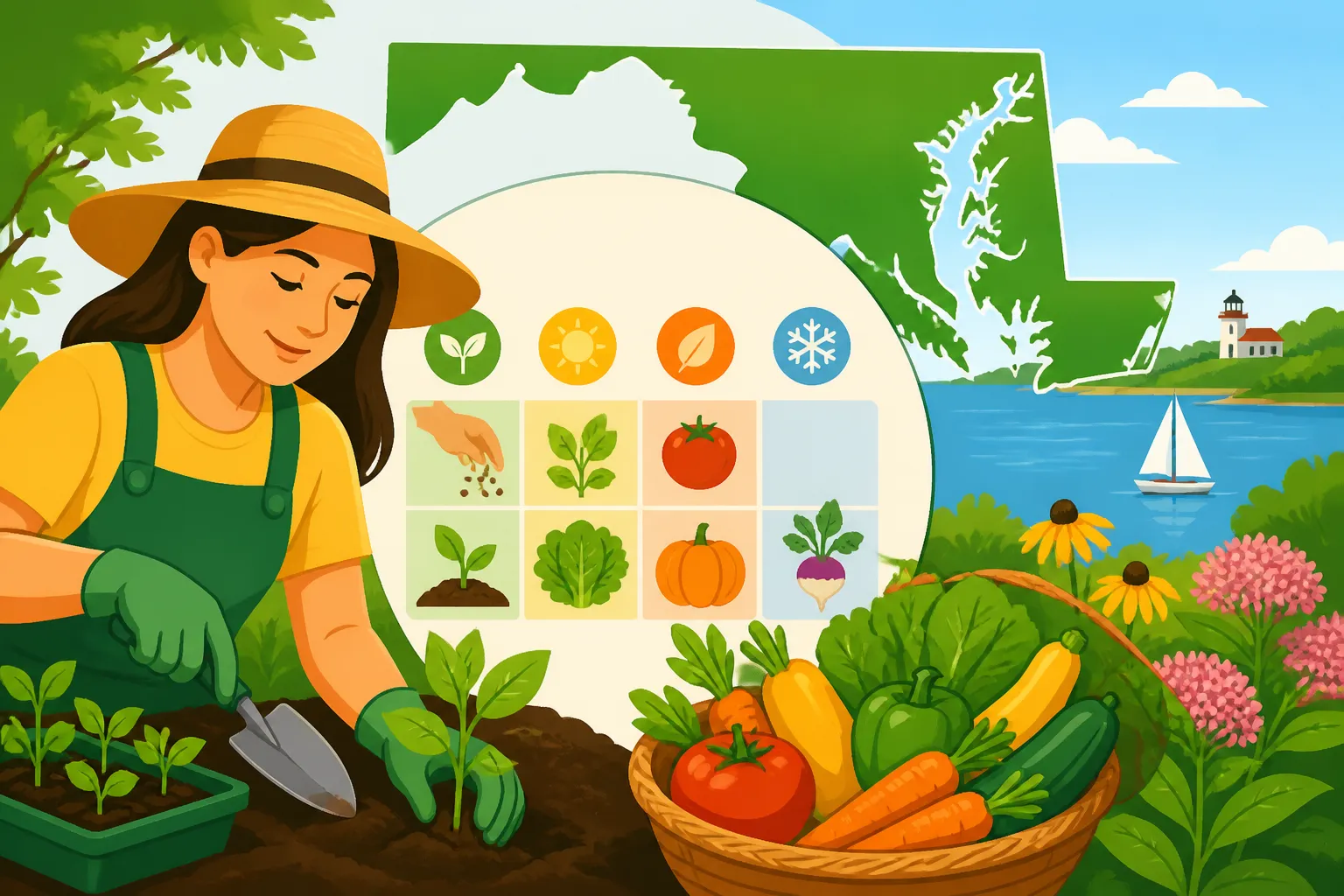
Maryland Planting Calendar: What to Sow and Harvest Now
A Maryland planting calendar is a starting point, not a set of dates that works everywhere in the state. Spring warmth, summer heat, fall frost and soil conditions vary by region and yard. This calendar helps you match crops to the season, decide what to do in mid-November, and adjust your sowing and harvest plans to local conditions.
How to Use a Maryland Planting Calendar
The most useful planting schedule combines the season, the crop and the conditions in your own garden. A date on a calendar can tell you when to start checking for a planting opportunity; it cannot tell you whether your soil is workable, whether a cold night is on the way or whether a shaded bed has warmed enough for a particular crop.
Start with three questions:
- What does the crop need? Cool-season crops tolerate chilly conditions better than heat-loving crops. Some seeds germinate in cool soil; others wait for warmer ground. Transplants can give slow-growing crops a head start, but tender seedlings still need a suitable outdoor environment.
- What is happening in your yard? Check the soil, recent weather and forecast. A sunny, sheltered bed can warm sooner than an exposed or low-lying one. Heavy rain can leave clay soil too wet to work, even when the air feels mild.
- How much growing time is left? A crop needs enough time to germinate, grow and reach a useful harvest before heat or cold slows it down. Check the seed packet or plant tag for days to maturity, and treat that figure as a planning estimate rather than a guarantee.
Maryland’s growing season calendar is shaped by more than one date. Maryland Growing Season Calendar: From Spring Thaw to Fall Freeze explains how the season’s progression affects what a garden can produce. For day-to-day decisions, compare a calendar with local frost information, soil temperature and a short-range forecast. Frost dates are probabilities, not promises: a typical date does not prevent an earlier or later frost in a particular year. Frost Dates and Planting Windows Across Maryland Climates offers more detail on using local frost information to plan a planting window.
A second useful distinction is the difference between a crop’s frost tolerance and its hardiness. A crop that can tolerate a light frost may still be damaged by a harder freeze. And a plant’s hardiness zone does not predict the last spring frost or tell you when soil is ready for sowing. For the distinction, see Why Hardiness Zones Do Not Tell You When to Plant Spring Crops.
| Garden condition | What it can tell you | What to do next |
|---|---|---|
| Soil is wet and sticks heavily to tools | The bed may be too wet to work without compaction | Wait for it to drain; avoid digging or walking on it |
| Soil is workable but still cool | Cool-season crops may be candidates, depending on crop and forecast | Check the seed packet’s germination guidance and sowing window |
| Soil is warm and nights are mild | Warm-season crops may be closer to their preferred conditions | Confirm soil warmth and check for cold nights before planting |
| The forecast calls for frost | Tender crops may be at risk, even if recent days were warm | Delay planting or use a suitable protective approach |
| A bed is shaded, windy or low-lying | Local conditions may differ from a nearby weather station | Use the more cautious timing for sensitive crops |
Keep a simple record as the season progresses. Note what you sowed, where you planted it, when seedlings emerged and when the first harvest came. Record problems too: a bed that stayed wet, seedlings that struggled in heat, or a crop that bolted early. These observations are often more useful for next year than a generic calendar. Keeping Garden Records to Plan Next Year’s Planting Schedule can help you turn those notes into a better schedule.
How Timing Shifts Across Maryland
Maryland includes mountain and highland areas, Piedmont landscapes and Coastal Plain conditions, including the Eastern Shore. These broad regions do not warm, cool or dry at the same pace. Elevation, distance from the water, slope, exposure and the shape of a yard can all shift planting opportunities.
Western Maryland’s higher and cooler locations may have a shorter season for heat-loving crops than warmer areas. In the Piedmont, a single neighborhood can contain sheltered gardens, exposed slopes and low spots that hold cold air. Coastal Plain gardens may experience different seasonal patterns from inland gardens, but sandy ground, wind and water availability still matter. These are broad tendencies, not planting dates for every town or property.
A practical way to adjust your schedule is to think in terms of signals rather than a single statewide day:
- In spring, look for workable soil and suitable conditions for the crop. A warm afternoon does not mean that the soil has warmed enough for heat-loving seeds.
- Before setting out tender plants, check the forecast for cold nights and consider how exposed the bed is.
- In summer, protect new sowings from drying and heat. A crop that germinates well in spring may struggle if sown into hot, dry ground.
- In fall, count backward from the expected end of favorable growing conditions, allowing for germination and establishment. A fall planting may need to be made well before the crop’s final harvest window.
- In winter, focus on protection, storage, planning and indoor growing rather than trying to force outdoor sowing into unsuitable conditions.
Your garden’s microclimate can shift these signals. A south-facing bed beside a wall may warm sooner than a north-facing bed. A sheltered corner may be less exposed to wind, while a low pocket can collect cold air. A raised bed can warm and drain differently from in-ground soil, but it can also dry faster. Sheltered Microclimates: How Buildings Shift Yard Freeze Dates and Garden Microclimates: How Wind and Fences Alter Spring Frost explain how yard features can influence timing.
Use local weather information as a guide, not a guarantee. A forecast can help you decide whether to delay sowing or protect tender plants, but it cannot eliminate the uncertainty of a changing spring or fall. If a crop is especially sensitive to cold, leave room in the schedule for a setback. Monitoring Local Weather Forecasts for Sudden Spring Freezes covers the role of forecasts in spring garden decisions.
If you are choosing between two possible planting dates, the safer choice is often to wait until the soil and forecast are suitable rather than sowing into a marginal window. Seeds that sit in cold, wet soil may germinate slowly or fail, and a tender transplant exposed to a sharp cold spell may be set back. The right timing is the one that gives the crop a reasonable chance to establish, not necessarily the earliest date someone else can plant it.
For a more local approach, use Maryland Planting Dates: Shifting Schedules by Region and County alongside the crop-specific guidance and your own records. If you garden on the Coastal Plain, Coastal Plain Vegetable Calendar: Planting on the Lower Eastern Shore provides a more focused regional perspective.
Spring: Start Cool-Season Crops, Then Shift to Warm-Season Plants
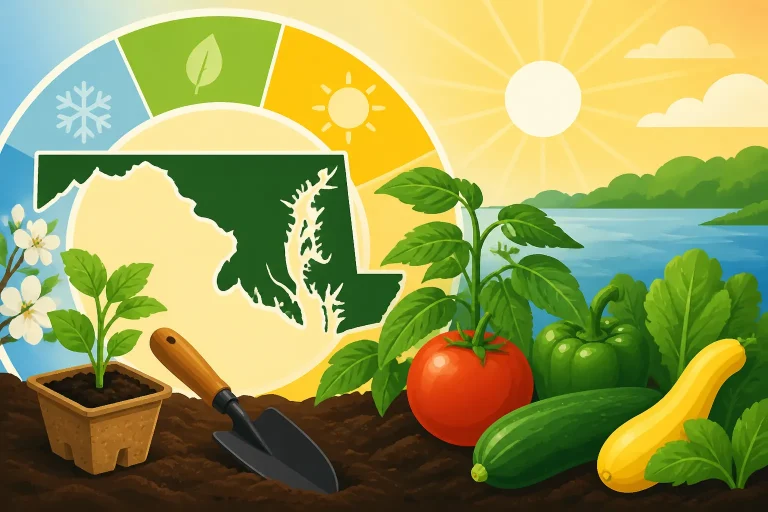
Spring planting works best as a sequence, not a single event. Cool-season crops can often go in before tender summer vegetables, while warm-season crops need more settled warmth. The exact transition depends on local conditions and the crop.
Begin with crops suited to cool conditions
As the ground becomes workable, gardeners can plan for cool-season crops such as peas, spinach, lettuce, radishes, carrots, beets, kale and other hardy greens. Whether to sow directly or transplant depends on the crop, the soil and your available time. Root crops are commonly sown directly because they form best without transplant disturbance. Some leafy crops can be started indoors or sown in place, depending on the crop and the gardener’s preference.
Do not confuse a workable soil surface with ideal seed conditions. A bed that has thawed or dried enough to rake may still be cold. Check the crop’s germination needs and avoid disturbing soil that is saturated. In heavy soil, working it too early can damage its structure and leave clods that are difficult to prepare for small seeds. Timing Spring Vegetable Sowing by Soil Temperature and How Cold Soil Temperatures Slow Down Spring Seed Germination explain why temperature and moisture matter.
Make small, manageable sowings rather than filling every bed at once. If early weather turns unfavorable, you have not committed all your seed to one risky window. If conditions are good, you can add another sowing later to spread out the harvest.
Start some crops indoors
Indoor seed starting is useful for crops that benefit from a head start or need a longer growing period than direct sowing can provide. Tomatoes and peppers are common examples, but the best approach depends on the crop, your lighting and your ability to harden off seedlings before transplanting. Starting too early can produce large, crowded plants that are difficult to maintain indoors and may be stressed when moved outside.
Use clean containers and a suitable seed-starting medium. Provide bright light, steady moisture without waterlogging, and enough space for seedlings to grow. As planting approaches, gradually expose plants to outdoor conditions rather than moving them directly from a protected indoor space into sun, wind and cool nights. When to Start Seeds Indoors and Transplant in Maryland and Acclimating Tender Transplants to Maryland Garden Beds offer additional help with this process.
Seed packets can guide sowing depth, spacing and expected germination, but follow the instructions for the specific seed rather than assuming all seeds need identical treatment. Botanical Interests seed packets, like other reputable packets, can be useful for crop-specific sowing and spacing information. Use the instructions as a starting point and adapt the timing to the conditions in your garden.
Wait for tender crops to have suitable conditions
Tomatoes, peppers, beans, cucumbers, squash, melons and other warm-season crops need warmer conditions than spring greens. Avoid planting them merely because daytime temperatures are pleasant. Check that the soil has warmed for the crop and that the forecast is not calling for a cold night. A transplant may survive a cool spell but still stall; direct-sown seeds may rot or germinate unevenly in cold, wet soil.
If you have already started seedlings, protect the investment by hardening them off and waiting for conditions that support establishment. If the season has advanced and you have not started seeds, buying healthy transplants can be a sensible alternative to sowing late indoors. Starting Late in Maryland: When to Buy Starts Over Seeds compares those options.
Spring beds also benefit from good preparation. Remove weeds while they are small, loosen compacted areas without working wet soil, and make sure water can drain. Avoid adding fertilizer or amendments automatically; first consider what the soil and crop need. Understanding Your Garden and Lawn Soil Test Report can help interpret a soil report if you have one.
Summer: Plant for Heat, Protect New Sowing and Keep Harvests Coming
Summer is not a single planting window. Early summer can still be a good time for warm-season crops, while midsummer heat can make new sowings of cool-season vegetables difficult. Later in the season, gardeners begin planning fall crops even while summer vegetables are still producing.
Sow warm-season crops when the soil is ready
Once soil and weather are suitable, direct-sow or transplant warm-season vegetables according to the crop. Beans, squash, cucumbers and melons are among the crops that need warmer ground than spring greens. Check the seed packet for sowing depth and spacing, and water the seedbed carefully so that it stays moist without becoming waterlogged.
When planting in summer, pay close attention to moisture. The top layer of soil can dry quickly in sun and wind, especially in containers and raised beds. Seeds need consistent moisture to germinate, and new transplants have not yet developed extensive roots. Water the soil rather than relying only on a light sprinkle that wets the surface and dries soon after.
Do not assume that every warm-season crop can be sown at any point in summer. Compare the crop’s expected time to maturity with the remaining favorable growing period. A crop that needs a long season may not have time to produce a useful harvest if planted late. Matching Crop Maturity Speeds to Available Growing Windows helps with that decision.
Use succession sowing for a steadier harvest
Many fast-growing crops are more useful when planted in small batches rather than all at once. Radishes, lettuce and other greens can be sown in succession when conditions suit them. A gap between sowings can spread the harvest and reduce the chance that everything matures during the same short period.
Succession sowing is not a strict calendar rule. Heat, moisture and germination conditions affect how quickly seedlings develop, so check the bed before adding seed. If the weather is too hot for a crop to germinate well, wait for cooler conditions or choose a more suitable crop for the moment. Succession Planting in Maryland: Which Crops to Sow Repeatedly and Staggering Garden Sowing Every Two Weeks for Continuous Harvests explain ways to plan repeated sowings.
Harvesting regularly can also keep a garden productive. Pick crops at the stage you prefer and remove damaged or overmature produce. For crops that continue producing after harvest, frequent picking may encourage more growth, although the response varies by plant.
Start planning fall crops before summer ends
Fall vegetables need time to establish before the weather cools. It is easy to wait until summer crops fade and then realize that fall sowing should have started earlier. Work backward from the likely end of favorable growing conditions, allowing for germination, growth and any time needed for transplants to settle in.
Brassicas and leafy greens may be grown for fall harvest, but starting them during hot weather can be challenging. Seedlings may need shade, steady moisture and protection from heat while they establish. Some gardeners start seedlings in a cooler, sheltered place and transplant them when conditions are more favorable. Others sow directly when the weather allows. The best option depends on the crop and the state of the bed.
Use a fall plan to decide which summer beds will become available and when. Remove spent plants when they are no longer productive, but avoid clearing healthy crops too early if they are still yielding. Replacing Spent Summer Crops: Timing Your Autumn Garden and Beating Midsummer Heat: When to Start Cool-Season Crops for Fall can help coordinate the transition.
Fall: Sow Cool-Season Crops and Prepare for Frost
Fall planting depends on working backward from colder weather. Cool-season crops can often produce well as temperatures ease, but a late sowing may not have enough time to mature. The date that works in a warmer or more sheltered yard may be too late in a cooler, exposed location.
Choose crops according to the time they need and the harvest you want. Some gardeners aim for mature roots or full-size heads; others sow greens for young leaves. A crop harvested young may fit a shorter window better than one that needs to reach full size, but it still needs enough time to germinate and establish.
Choose crops and sowing methods with the remaining season in mind
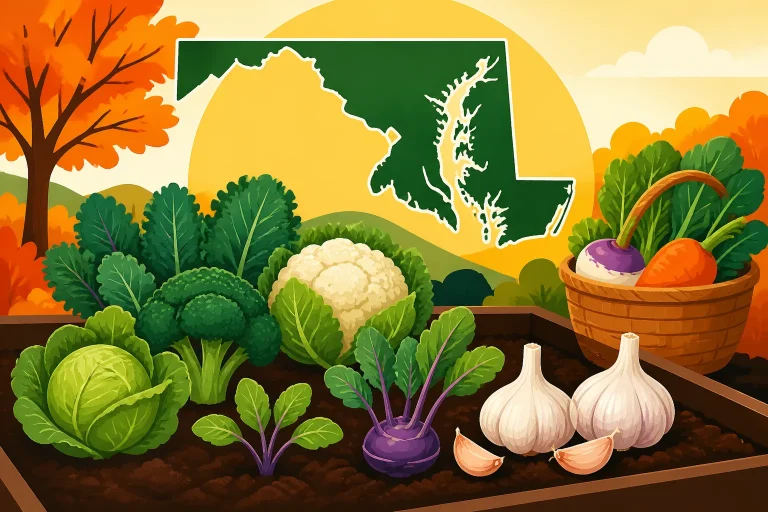
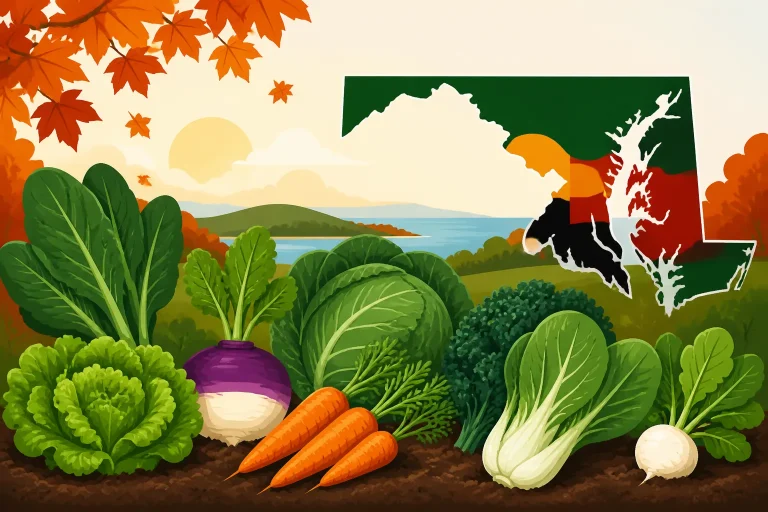
Lettuce, spinach, radishes, turnips and other cool-season crops can be part of a fall plan when there is enough time and the conditions suit them. Some crops tolerate chilly weather better than others. Frost tolerance does not mean a crop can withstand every freeze, so check the crop-specific information before relying on it to remain outdoors.
Fall sowing may be direct or by transplant. Direct sowing avoids the shock of moving a seedling and works well for crops that prefer to grow in place. Transplants can help when the outdoor sowing window is short, but they need time to settle in and may need protection from summer heat if started early. When to Plant Fall Vegetables, Brassicas, and Garlic in Maryland and Late-Summer Sowing Dates for Maryland Fall Vegetables provide crop and timing considerations.
A simple plan for each fall bed is:
- Identify when the current crop is likely to finish.
- Choose a fall crop that fits the remaining growing window.
- Check its expected days to maturity and whether you will direct-sow or transplant.
- Prepare the bed as soon as it is available, without working wet soil.
- Keep new seed and transplants consistently moist while they establish.
- Watch forecasts as the season cools and be ready to protect crops that are vulnerable to frost.
Use covers thoughtfully
Row covers and other temporary protections can extend a harvest or help shield young plants from a light frost, but they do not make every crop winter-proof. Choose a cover appropriate for the crop and conditions, secure it so it does not blow away, and monitor plants underneath it. Covers can also trap heat on sunny days, so ventilation may be needed when temperatures rise. Extending Fall Vegetable Harvests in Maryland with Floating Row Covers and Light Frost vs Hard Freeze: How Maryland Garden Crops Hold Up cover these trade-offs.
A cover is not a substitute for knowing what the crop can tolerate. If a hard freeze is forecast, sensitive plants may need more protection than a lightweight cover can provide. Check local forecasts and product guidance, and avoid assuming that protection will guarantee a harvest.
Plan for garlic and winter transitions
Garlic is a fall-planted crop, but its timing is still influenced by regional conditions and soil workability. If you are considering planting cloves in mid-November, first check whether the ground is workable and whether local guidance indicates that the planting window remains suitable. Do not force planting into waterlogged or frozen soil. Maryland Garlic Planting Guide: Regional Timing from Hills to Shore provides more specific regional context, while Planting Garlic Cloves in Maryland in Mid-November focuses on the late-fall decision.
As vegetable beds wind down, remove diseased or badly damaged plant material and decide what can remain for a later harvest. Healthy hardy greens may continue to provide food as conditions allow. Add mulch only where it suits the crop and bed; avoid burying plants or creating a damp, compacted layer. Plan storage for harvested crops according to the crop’s needs, and check them regularly rather than assuming all produce will keep equally well.
What to Sow and Harvest Now in Mid-November
In mid-November, Maryland gardens are generally shifting away from routine outdoor sowing and toward harvest, protection and winter preparation. Conditions still vary across the state and from yard to yard, so let soil condition and local forecasts guide the day’s decisions.
Outdoor sowing: be selective
Mid-November is not a dependable time to start most vegetables from seed outdoors. Cold soil can slow or prevent germination, and seedlings that do emerge may have too little time to establish before winter conditions. If you are considering a late sowing, confirm that the crop is suited to it and that the seed packet or reliable crop guidance supports the timing in your region. Do not sow simply because a few mild days are forecast.
Garlic may be an exception to the general move away from outdoor planting because it is a fall-planted crop. But whether planting is still appropriate depends on local conditions and the state of the soil. If the ground is frozen, saturated or difficult to work, wait rather than damaging the bed. Use Maryland Garlic Planting Guide: Regional Timing from Hills to Shore to weigh regional timing.
For a small indoor project, microgreens can be a practical choice. They grow in shallow trays in a protected space and are harvested young, so they do not depend on an outdoor planting window. Follow the seed supplier’s instructions for the crop and growing method, use clean containers and suitable growing medium, and keep trays in a bright spot. Growing Quick Salad Greens and Microgreens Indoors on Trays has more detail.
Harvest what is ready
Walk the garden and check crops before a forecast freeze. Harvest vegetables that are ready, particularly tender crops that may be injured by cold. Root crops can often remain in the ground for a while if conditions allow, but waterlogged soil, hard freezes and difficulty digging can change that plan. Pull only what you can use or store appropriately, and handle harvested produce gently.
Hardy greens and other cold-tolerant crops may continue to be harvested as long as they remain in good condition. Their tolerance varies by crop and by the severity and duration of cold. A light frost and a hard freeze are not the same event, and protection that helps with one may not be enough for the other. Check the forecast and the crop’s needs rather than relying on a general claim that a vegetable is “frost hardy.”
If you use row covers, secure them and check beneath them after weather changes. Covers can protect crops, but they may also limit light or hold excess heat during a mild, sunny spell. Remove or ventilate them when appropriate for the crop and conditions.
Prepare beds without overworking the soil
Use late fall to tidy selectively rather than stripping every bed bare. Remove plants that are diseased or clearly finished. Healthy plants that are still producing can remain until conditions or crop quality make harvest impractical. If you plan to plant garlic or another suitable crop, prepare only when the soil is workable.
Avoid digging wet soil. If the soil clumps, smears or sticks heavily to tools, give it time to drain. Compaction and rough clods can make spring preparation harder. Instead, use the day for tasks that do not require working the bed: clean and store tools, label seed packets, review garden notes, or plan crop rotations.
Plan next year while the details are fresh
Write down what performed well and what did not. Include planting dates or approximate timing, location, variety if known, harvest period, pest or disease issues and any unusual weather effects. Note which beds dried quickly, which stayed wet and where frost seemed to linger. These observations help improve next year’s planting plan without relying on memory alone.
Use the seed packets you have as a planning aid, but check that the seed is still in usable condition and store it appropriately. When ordering seed, choose crops that fit your space, light and intended harvest. If you grow only a small garden, a few well-timed sowings can be more manageable than buying a large assortment and trying to plant everything at once.
Frequently Asked Questions
Can I plant vegetables outdoors in Maryland in mid-November?
Most routine vegetable sowing is no longer a reliable choice in mid-November because cold soil and limited growing time can prevent seeds from establishing. Garlic may still be considered if local conditions and soil workability support it. Check crop-specific guidance and avoid planting in frozen or waterlogged ground.
What vegetables can I harvest after a frost?
It depends on the crop and how severe the cold is. Some cool-season crops tolerate a light frost, while tender crops can be damaged. Check the forecast and harvest ready crops before a freeze if they are vulnerable. A crop’s frost tolerance does not guarantee it will survive a hard freeze.
Should I use a statewide date to decide when to plant?
Use statewide guidance as a starting point, not a fixed rule. Maryland’s regions and individual yards differ in elevation, exposure, soil and local weather. Compare the calendar with local forecasts, soil conditions and the needs of the crop.
Is a hardiness zone enough to plan vegetable planting?
No. A hardiness zone describes winter cold conditions relevant to perennial plant survival; it does not tell you when spring soil is warm enough or when a frost will occur. Use a planting calendar, local frost information and crop-specific guidance together.
Disclaimer
This article is for general informational purposes only and does not constitute professional advice. Laws, prices and regulations vary by location and change over time. Consult a qualified professional for guidance on your specific situation. Maryland Gardening Guide is not a government agency and is not affiliated with any university extension, state department of agriculture or other government agency.