When to Plant Fall Vegetables, Brassicas, and Garlic in Maryland
A successful Maryland fall garden starts earlier than it looks: many cool-season crops need to be sown or transplanted while summer heat is still around. The right timing depends on your county, the crop’s maturity time, and how much cold it can handle. Use a local frost estimate to plan backward, then adjust for heat, soil moisture, and the harvest you want.
Plan backward from your fall harvest
Fall planting is less about picking one statewide date and more about working backward from the weather and the crop. Maryland’s growing conditions vary by region, and even nearby yards can differ: a sheltered urban bed may stay warmer than an exposed, low-lying garden.
Start by finding the expected first fall frost or freeze for a nearby weather station. These dates are probabilities, not guarantees, and can shift from year to year. The local normals can help you build a window, but keep an eye on the forecast as the season approaches. Finding Local Frost and Freeze Date Normals for Your Maryland Town explains how to use local estimates.
Next, check the days to maturity on the seed packet or plant label. For direct-sown crops, count from sowing; for transplants, count from transplanting if the label gives that information. Add time for slower growth as days shorten and temperatures cool. A crop that matures quickly in summer may take longer in autumn, especially once the garden receives less daylight.
The basic planning steps are:
- Choose the harvest you want. Decide whether you want full-size heads and roots, or smaller leaves and young roots for an earlier harvest.
- Find a local frost estimate. Use a nearby station rather than assuming the same window applies across Maryland.
- Count back from the target harvest. Use the crop’s maturity information as a starting point, allowing extra time for cool, shortening days.
- Check the crop’s cold tolerance. Some vegetables tolerate light frost; others need protection or should be harvested before a hard freeze.
- Move the schedule earlier if needed. A western or elevated site, an exposed bed, or a garden with limited sun may need an earlier start than a sheltered spot.
| Crop group | Common Maryland fall timing | Usual approach | Main timing concern |
|---|---|---|---|
| Broccoli, cabbage, cauliflower | Start or transplant in midsummer, with timing adjusted by region and variety | Often easiest as transplants | Seedlings need time to establish before cool weather |
| Kale, collards, and some other hardy greens | Sow or transplant in midsummer into late summer | Either direct sow or transplant | Hot, dry soil can slow or damage young plants |
| Lettuce and spinach | Sow in late summer, with later sowings possible where conditions allow | Direct sow or transplant | Germination and establishment can be difficult in hot soil |
| Carrots, beets, and radishes | Sow in midsummer to late summer, depending on local frost window and maturity time | Direct sow | Roots need enough time to size up before cold weather |
| Garlic | Plant in autumn, commonly during October or November | Plant individual cloves | The bed needs good drainage and cloves need time to root |
These are broad planning windows, not county-specific cutoffs. Regional adjustments matter, especially for crops that need a long establishment period. The Late-Summer Sowing Dates for Maryland Fall Vegetables and Planning Fall Vegetable Beds Around Maryland Freeze Dates articles offer additional ways to match crop timing to your garden.
Time brassicas for strong heads and steady growth
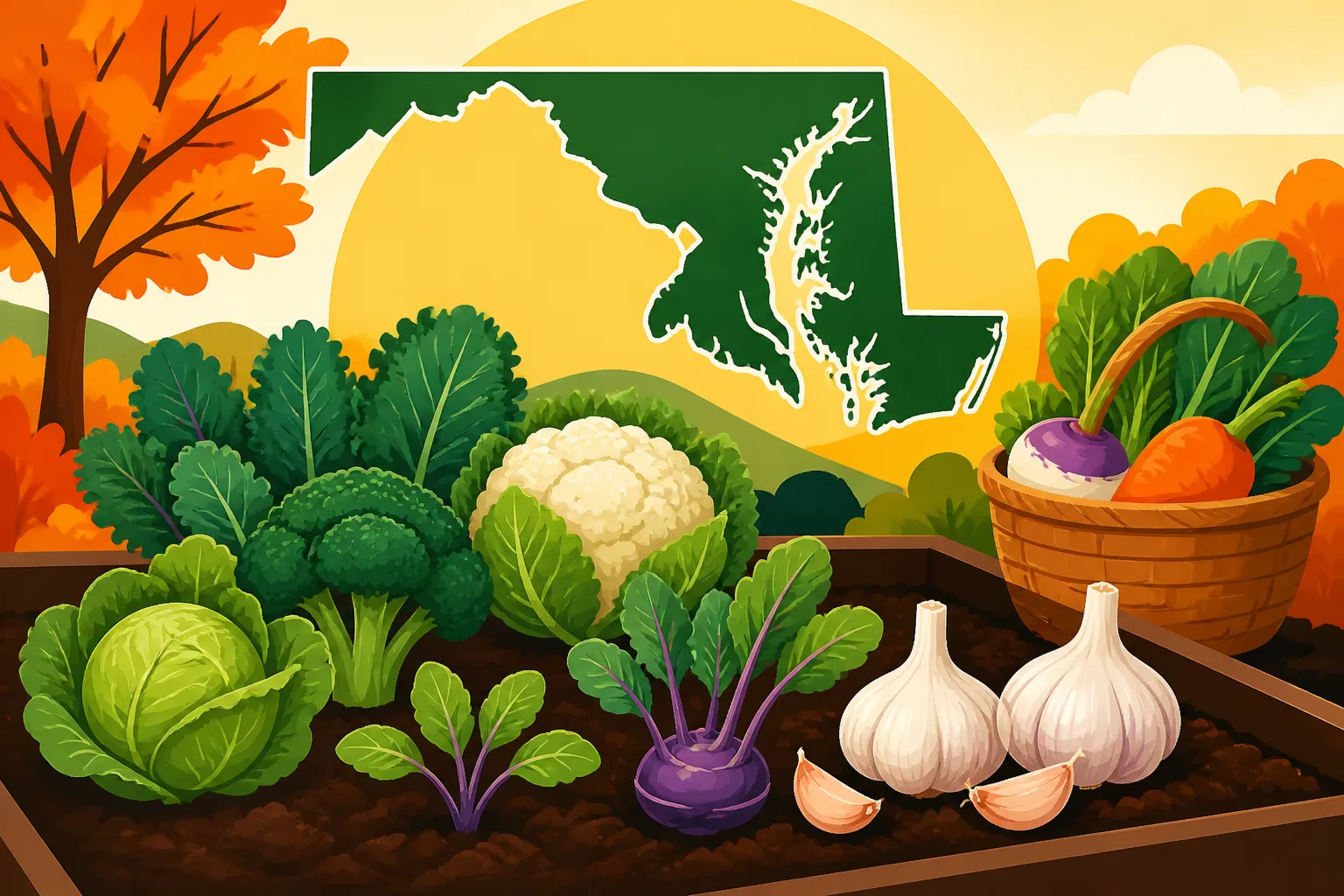
Brassicas include broccoli, cabbage, cauliflower, kale, and collards. They are classic fall crops, but they are not all equally forgiving. Broccoli and cabbage are often grown from transplants for a fall harvest because young plants can establish while summer is still hot. Kale and collards are also commonly transplanted, though they can be direct-sown when there is enough time for seedlings to develop.
Start early enough to beat heat-related delays
The challenge is that brassicas need a head start, yet young plants do not thrive when they are stressed by intense sun, hot soil, or dry conditions. In much of Maryland, planning begins in midsummer rather than waiting for autumn weather to arrive. Broccoli and cabbage may be started indoors or purchased as young plants, then moved into the garden when they are sturdy enough to handle the transition.
Use the variety’s maturity information as a guide, but don’t assume the calendar will match ideal growing conditions. A transplant may pause after being set out, and a seedling may grow slowly during heat. If you are starting from seed, allow time for germination and for the plant to reach transplant size before counting the outdoor growing window.
The best date also depends on the harvest goal. A gardener aiming for large, fully developed heads needs more time than someone who is content to pick smaller leaves or immature heads. If your first sowing is late, consider choosing a quicker-maturing type when available, or plan for a smaller harvest rather than expecting a full-size crop before cold weather.
For more detail on the two crops that often need the most careful timing, see Transplanting Fall Broccoli and Cabbage Across Maryland Zones.
Set plants out carefully in midsummer
A transplant that has spent its life in a sheltered nursery tray can struggle when moved directly into a sunny Maryland bed. Harden plants gradually before transplanting, giving them a chance to adjust to outdoor light and conditions. Water the root zone before and after planting, and avoid leaving small transplants to dry out while they settle in.
If the soil is dry, moisten it before planting rather than trying to compensate with a quick surface sprinkle afterward. A layer of mulch can help conserve moisture and moderate soil temperature, but keep it from pressing against plant stems. Newly planted starts need consistent attention: their roots are shallow, and a short dry spell can set back establishment.
Choose a site with suitable light and drainage. Brassicas need enough sun to grow well, but an exposed bed that reflects intense afternoon heat may be harder on new plants than a spot with some relief from the harshest sun. Avoid planting into waterlogged ground; soggy roots are a poor start for any fall crop.
Protect young starts from summer stress
Heat can affect both transplants and direct-sown brassicas. Seed may germinate poorly in very warm, dry soil, and seedlings can wilt quickly when their roots have not yet spread. Keep the seedbed evenly moist while germination is underway, then continue watering as needed to prevent severe drying. Avoid assuming that a brief shower soaked the root zone.
Temporary shade can help protect young seedlings during the hottest part of the season, particularly in a bed that bakes in afternoon sun. Remove or adjust protection once plants are established so they receive enough light and airflow. The practical options and trade-offs are covered in Protecting Young Fall Seedlings from Maryland Midsummer Sun and Heat.
Succession planting can reduce the risk of putting all your hopes on one batch. Sow a small second group or set out another round of transplants after the first is established, provided there is enough time for the later plants to mature. Keep the maturity date in view: a second planting only helps if the crop can make useful growth before sustained cold arrives.
Sow greens and roots while the soil is still warm
Fall greens and root vegetables are useful because they can fill beds after summer crops begin to fade. But “cool-season crop” does not mean “wait until cool weather.” Many need to start in warm soil so their roots and leaves have time to develop before fall growth slows.
Greens: sow for a sequence of harvests
Spinach, lettuce, kale, and other greens can be sown in more than one round. Starting a succession rather than sowing the entire bed at once can extend the harvest and reduce the chance that one hot spell or dry stretch wipes out the whole planting. Later sowings can be useful, but they need enough time to establish and should be matched to your local weather window.
Spinach is particularly sensitive to challenging germination conditions. A prepared, evenly moist seedbed helps, and light shade can make a hot late-summer sowing more manageable. Keep the surface from crusting or drying out while seeds sprout. Once seedlings are established, thin crowded plants so they have room to grow.
Lettuce offers flexibility because gardeners can harvest young leaves before plants reach full size. That can be useful when the sowing window is tight. Choose a harvest stage that fits the time remaining, and avoid expecting a late planting to behave like one sown under gentler spring conditions. For a crop-specific schedule, see Direct-Sowing Fall Spinach in August Across Maryland Beds.
Roots: allow time for the edible part to develop
Carrots and beets need a workable stretch of growth before autumn cold slows them down. Direct-sow them into loose, prepared soil so seedlings can emerge and roots can develop without meeting a hard surface or dense clods. Keep the seed row moist during germination. A dry top layer can interrupt the process even when the soil below feels damp.
Radishes are often quicker than carrots or beets, making them useful for a shorter window or as a follow-up crop. They still need consistent moisture and suitable spacing. Crowded seedlings may produce small roots, while uneven moisture can lead to uneven development. Thin seedlings according to the seed packet instructions rather than leaving them packed together.
For all three crops, read the maturity information and assess the bed before sowing. A bed that has just held tomatoes or another summer crop may be dry, compacted, or crowded with roots. Clear spent plants, loosen the surface without working soil that is wet, and add organic matter only if the bed needs it. For crop-by-crop timing and additional late-summer options, see Beating Midsummer Heat: When to Start Cool-Season Crops for Fall.
Keep succession planting realistic
A calendar with multiple sowing dates looks appealing, but each planting needs space, water, and time to mature. A practical approach is to sow a modest first batch, check how it performs, then decide whether to repeat. This lets you respond to local conditions rather than committing the whole bed at once.
When a summer crop comes out, clear the old plants and weeds before sowing. Avoid leaving the soil bare and dry for long periods. If the bed is not ready for seed immediately, cover or mulch it lightly, then prepare the seed row when you are ready to plant. Replacing Spent Summer Crops: Timing Your Autumn Garden discusses how to make that transition without losing valuable growing time.
Plant garlic in autumn, not with the summer crops
Garlic follows a different schedule from fall vegetables. It is planted in autumn so the cloves can establish roots before winter, then resume growth as conditions permit. In Maryland, planting commonly falls in October or November, but the best window depends on your local weather and the condition of the soil. Avoid planting into waterlogged ground or waiting until the soil is too cold and difficult to work.
Choose a bed that drains well
Garlic does poorly in a persistently wet site. Select a bed where water does not stand after rain, and prepare the soil so it is loose enough for roots and bulbs to develop. If a bed stays soggy, choose another location or address the drainage problem before planting.
Plant healthy cloves from a suitable planting source rather than relying on grocery-store garlic, which may not be suited to local growing conditions and can have been treated to discourage sprouting. Separate the bulb into cloves shortly before planting, keeping the protective skins intact. Set cloves with the pointed end facing up, then cover them with soil and mulch the bed to help moderate soil conditions.
The exact planting depth and spacing can vary with the planting source and method, so follow reliable growing instructions for the garlic you have. Avoid placing cloves so close together that mature plants compete for space. A mulch layer can reduce weeds and protect the bed, but it should not be so heavy or wet that it holds excessive moisture against the plants.
Protect the planting and label it
It can be surprisingly easy to forget where garlic was planted once the bed is covered. Mark the row clearly and note the planting date and source. This is especially useful if the bed is shared with other autumn crops or if the garlic is planted in a spot that will be disturbed later.
Keep the bed free of competing weeds. Garlic does not appreciate having to compete for water and nutrients, particularly while it is establishing. Check moisture when conditions are dry, but do not keep the soil constantly saturated. The needs of the bed can change with rainfall and temperature, so use the soil’s condition rather than a fixed watering routine.
For regional considerations, see Maryland Garlic Planting Guide: Regional Timing from Hills to Shore. Its central lesson is useful statewide: local conditions influence the planting window, and a well-drained bed matters as much as the date on the calendar.
Adjust the schedule for region, weather, and garden conditions
Maryland gardeners should expect differences between the Coastal Plain, central areas, and higher or more exposed western locations. Local frost patterns, elevation, wind, and proximity to water all affect how long crops can continue growing. A single planting date cannot account for every garden.
Use a local weather station as a planning reference, then consider the conditions in your own yard. A slope, wall, or sheltered courtyard may create a warmer microclimate. A low spot can collect cold air, while an open site may be exposed to drying wind. These differences can shift both spring and autumn planting decisions; Sheltered Microclimates: How Buildings Shift Yard Freeze Dates provides more context on how site features affect frost risk.
A useful way to adapt the calendar is to make three versions of each planting plan:
- Earlier window: For a colder, elevated, windy, or frost-prone site, choose an earlier sowing or transplanting window.
- Typical window: Use your nearest local frost estimate and the crop’s maturity information as a starting point.
- Later window: Consider a later sowing only for a quick crop, a protected site, or a harvest goal that does not require full-size plants.
Protection can extend the harvest, but it cannot make every late planting mature. Floating row covers can help buffer cold and wind for suitable crops, while low tunnels or cold frames may offer additional protection when managed carefully. Covers also need attention: they can trap heat on sunny days, and some crops need access to pollinators when flowering. For a practical overview of season extension, see Extending Fall Vegetable Harvests in Maryland with Floating Row Covers.
Keep a simple record of sowing and transplant dates, weather setbacks, and harvest results. Note whether germination was poor, transplants stalled, or a particular bed stayed unusually wet. Those observations make next year’s plan more useful than a generic calendar. Keeping Garden Records to Plan Next Year’s Planting Schedule can help turn those notes into a repeatable schedule.
Finally, treat the calendar as a guide, not a promise. A stretch of late-summer heat may call for shade and more careful watering; an early cold snap may call for harvesting mature crops sooner or adding suitable protection. Check the forecast, inspect the plants, and adjust the plan rather than relying on a date alone.
Frequently Asked Questions
Can fall vegetables be planted in Maryland in September?
Some quick crops and greens may still be worth sowing in September, but the answer depends on your location, the crop, and the harvest size you expect. Check the crop’s maturity time against your local frost estimate. Later sowings are more likely to produce small or partial harvests unless conditions and crop choice are favorable.
Should broccoli and cabbage be direct-sown or transplanted for fall?
Both methods can work, but transplants give these crops a head start and are often a practical choice for fall gardens. They still need time to establish after planting, so handle and water them carefully during hot weather. Use the variety’s maturity information and local conditions to plan.
Can garlic be planted in the same bed as fall vegetables?
It can be, if there is enough space and the bed drains well. Keep the garlic row marked and avoid disturbing it when clearing or planting nearby crops. A separate section of the bed can make weeding and harvest easier.
Will a frost ruin my fall garden?
Not necessarily. The effect depends on the crop, how cold it gets, how long the cold lasts, and whether plants are protected. Some greens tolerate light frost better than tender crops, while a hard freeze can injure or kill less-hardy plants. Check the forecast and the needs of each crop rather than assuming every frost has the same effect.
Disclaimer
This article is for general informational purposes only and does not constitute professional advice. Laws, prices and regulations vary by location and change over time. Consult a qualified professional for guidance on your specific situation. Maryland Gardening Guide is not a government agency and is not affiliated with any university extension, state department of agriculture or other government agency.